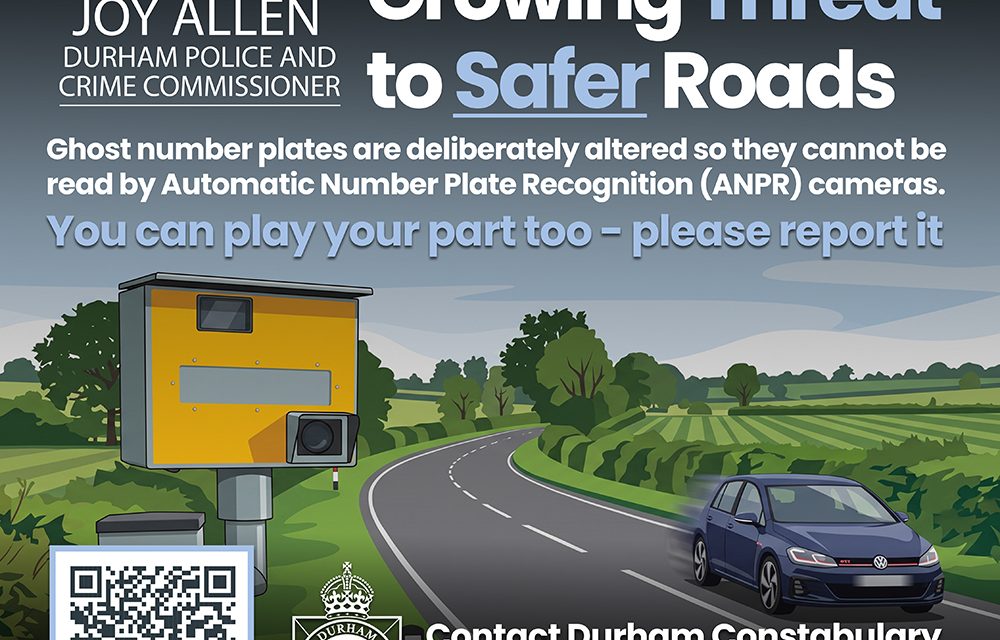
Ghost Plates, a Growing Threat to Safer Roads.
When most people think about road safety, they think about speeding, drink or drug driving, seatbelts, or mobile phones. Few will have heard of the term ‘ghost plates’, yet these illegal number plates are becoming an increasingly serious threat on our roads.
Ghost plates are deliberately altered so they cannot be read by Automatic Number Plate Recognition (ANPR) cameras. Criminals use reflective films, sprays, or illegal lettering to make their vehicles effectively invisible to one of policing’s most valuable crime-fighting tools.
Alongside cloned number plates, where offenders copy the identity of an innocent motorist’s vehicle, ghost plates allow criminals to evade detection while leaving victims to deal with fines, penalties, and the stress of proving their innocence.
Illegal plates are linked to organised crime, drug trafficking, vehicle crime, people smuggling, rogue trading, and other serious offences. By concealing their identity, offenders can move more freely and reduce their chances of being caught. Every unreadable plate weakens ANPR technology, which police rely on daily to identify offenders, locate stolen vehicles, and protect communities.
The current registration plate system has failed to keep pace with technology. With thousands of registered suppliers and limited oversight, stronger safeguards are needed to prevent rogue businesses supplying illegal plates.
That is why, as joint national lead for Road Safety, I have urged Police and Crime Commissioners across England and Wales to support stronger legislation, including tougher penalties, criminal record checks for suppliers, stronger DVLA enforcement powers, and improved public awareness.
Closing these loopholes will strengthen road safety, protect innocent motorists, and make it harder for organised criminals to evade the law.
If you suspect a vehicle is displaying an illegal or cloned number plate, please report it to Durham Constabulary via 101 or the online reporting service, or anonymously through Crimestoppers on 0800 555 111. Your information could help keep our communities safe.
Ghost Plates a Threat to Safer Roads