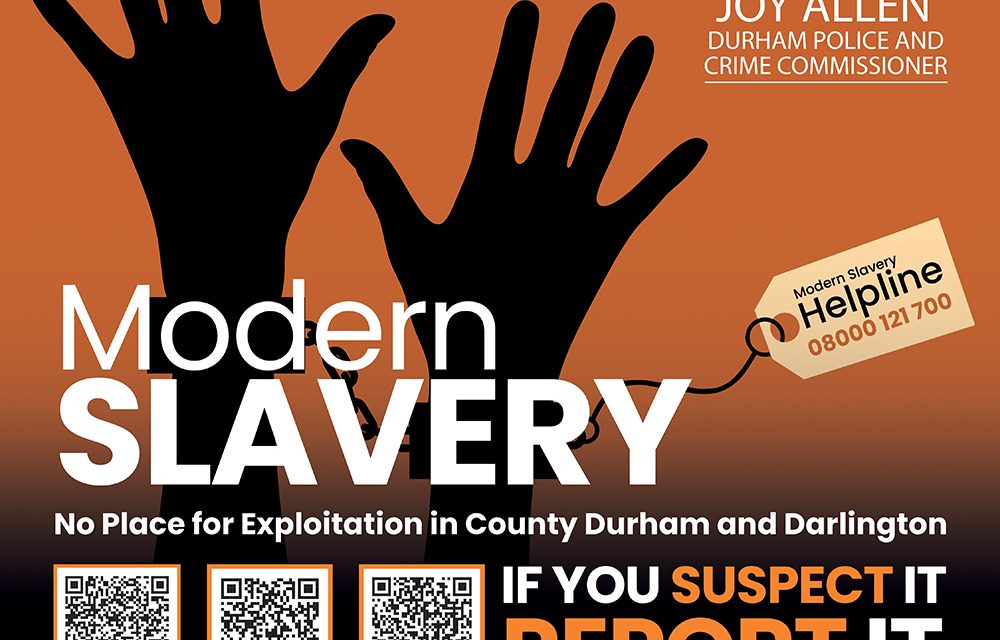
Modern Slavery: No Place for Exploitation in County Durham and Darlington
Last week, I met with a new cohort of Modern Slavery Champions from Durham Constabulary and our partner agencies. They have volunteered to help their colleagues and frontline staff recognise exploitation, safeguard victims, and ensure perpetrators are held to account to ultimately improve the identification, response, and prevention of modern slavery. This work matters because sadly modern slavery is not a crime of the past – it is happening here, in County Durham and Darlington, often in plain sight.
What Is Modern Slavery?
Modern Slavery is when a person is controlled and exploited for the benefit of others, losing their freedom through deception, threats, or force. Modern slavery encompasses a wide range of abuses including slavery, servitude, forced or compulsory labour and human trafficking, for the purpose of exploiting a person. These are typically for financial benefit, though this is not always the principal motivation.
It can take many forms:
• Labour exploitation (forced or compulsory labour). Some common sectors and industries that are identified as vulnerable include, but not limited to, third-party recruitment, such as factory lines, supply chains, hand car washes, nail bars, the construction industry, hospitality, farm work, recycling plants, and care work.
• Domestic servitude
• Forms of sexual abuse or child sexual exploitation. Sexual exploitation does not always involve physical contact; it can also occur through the use of technology.
• Criminal exploitation – Other forms include, cannabis farming, forced marriage, begging, pickpocketing, bag snatching, ATM theft, selling of counterfeit foods.
Victims of modern slavery and human trafficking can be any age, gender, nationality and ethnicity. They are often vulnerable people who are tricked, coerced or threatened into involvement with work, or potential criminal activity.
Victims are then often not able to leave or report their exploitative situation due to fear, control or physical intimidation. It is possible that people may not recognise themselves as victims of modern slavery, even though they could be being unlawfully exploited.
Spotting the Signs
Because victims rarely come forward, public awareness is crucial. Signs can include:
• Fearful, withdrawn behaviour; someone who cannot speak without permission.
• No access to ID, documents, or wages; working excessive hours.
• Living in overcrowded or substandard conditions, sometimes where they work.
• Unexplained injuries, poor hygiene, or untreated health problems.
• Houses with covered windows, strong smells, or unusual electricity use – possible cannabis cultivation.
• People in sex work who appear controlled or unable to leave.
Please refer to our County Durham and Darlington Anti-Slavery Network website for further information on signs and indicators.
My Commitment as PCC
In my Police, Crime and Justice Plan 2025–2029, tackling modern slavery is a clear priority. I am committed to:
• Improving victim identification and safeguarding – ensuring immediate needs such as safety, medical care, food and shelter come first.
• Strengthening frontline awareness through our champions’ network, so professionals can spot victims who may not recognise themselves as such.
• Supporting long-term recovery via the National Referral Mechanism, which provides specialist services to help victims rebuild their lives.
• Backing enforcement action so perpetrators – whether in sex work, cannabis farms, or forced labour – face justice.
• Working with partners through the Anti-Slavery Network and safeguarding boards to strengthen community resilience.
How You Can Help
Durham Constabulary’s guidance says that if you suspect modern slavery or human trafficking, you can:
• Use the Modern Slavery Helpline (08000 121 700) – it is confidential, operates 24/7.
• Call 999 if someone is in immediate danger.
• Otherwise, contact the police via 101.
• Give information anonymously, if necessary, via Crimestoppers 0800 555 111 (or via their website)
No concern is too small. Your observation – a suspicious property, someone who seems fearful, someone living or working in conditions that seem wrong – could be what leads to liberation.
Standing Together
Modern slavery robs people of dignity, safety, and hope. But it does not have to persist. By staying alert, reporting concerns, and supporting victims, we can shine a light on this hidden crime.
As your Police and Crime Commissioner, I am determined that in County Durham and Darlington there will be no hiding place for modern slavery – whether behind closed doors, in a brothel, or in a cannabis farm. Together, we can bring hope and justice and create safer, stronger, and more resilient communities!
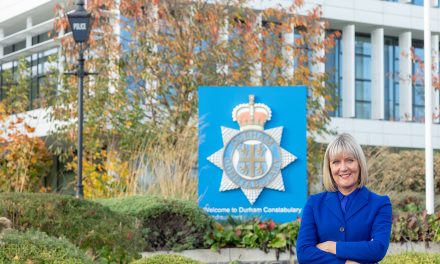
Joy Allen Durham Police and Crime Commissioner