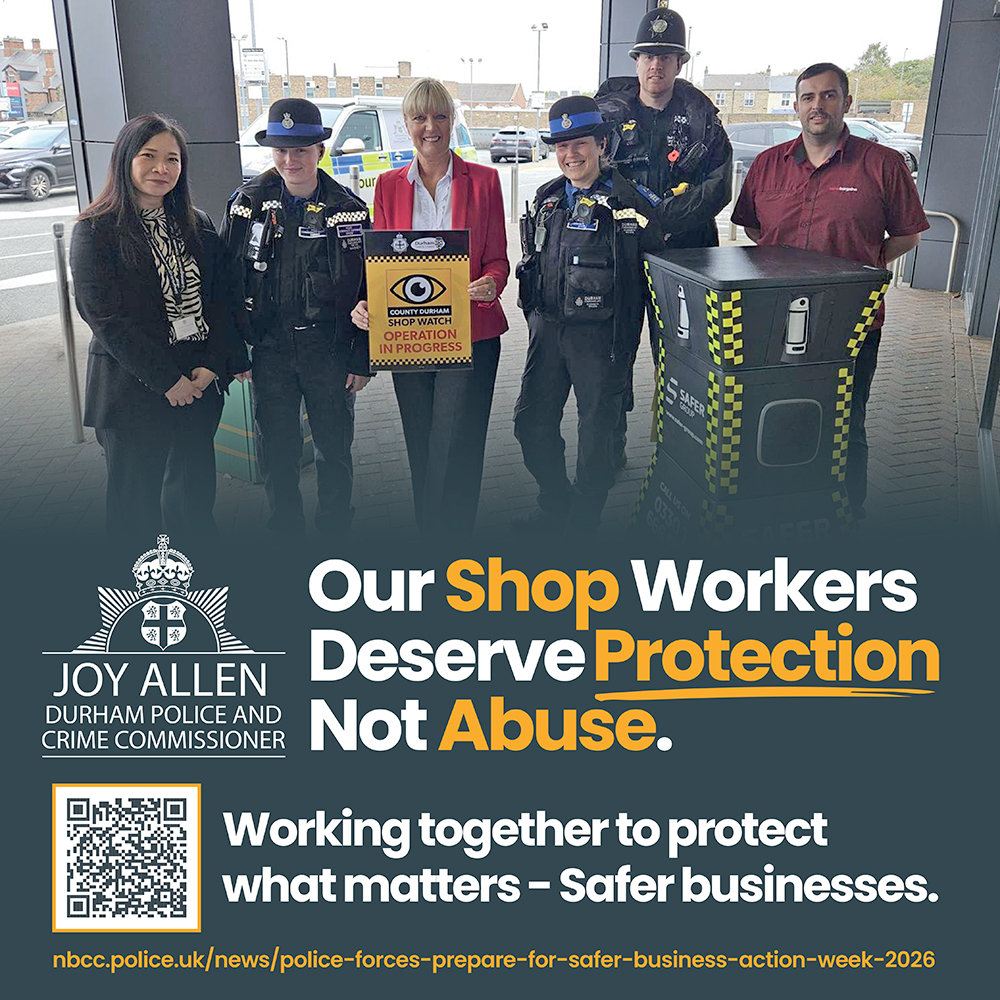

Nobody should go to work wondering whether today is the day they will be threatened, spat at or assaulted. Nobody should be expected to tolerate that sort of behaviour to earn their living. Yet for too many shopworkers fear has become part of their working day.
The businesses who responded to my business survey sent me a clear message. Almost nine in ten wanted more support to tackle shoplifting, while 62% wanted more police action against threats and verbal and physical abuse of staff. Two-thirds wanted more help with antisocial behaviour around their shops.
But the findings also exposed a worrying lack of confidence. Half of respondents said they reported fewer than one in ten incidents of abuse to police, and 43% were dissatisfied with the police response to crime.
We cannot tackle the full scale of retail crime if so many incidents go unreported. Workers need to know that speaking up is worth it: that they will be taken seriously, supported and told what happens next.
Safer Business Action Week, from 9–15 November, is an opportunity for us to stand alongside the people who keep our shops and high streets going. My message to them is clear: abuse is unacceptable, your safety matters, and you deserve action.
Retail crime is about more than stolen goods. Threats can destroy confidence. Repeated intimidation can leave someone dreading their next shift. Verbal and physical abuse can cause a lasting emotional trauma and injury that stays with victims and their families long after the working day has ended.
My Police, Crime and Justice Plan commits me to preventing crime, supporting victims and reducing reoffending. For shopworkers, those promises must mean being listened to, receiving support and seeing persistent offenders stopped in their tracks.
I have championed support for retail workers through my Victim Care and Mentor Service, and I will continue holding the Chief Constable to account for the response victims receive. Reporting abuse must never feel like a pointless exercise.
But protecting shopworkers also means confronting why some offenders return repeatedly.
We cannot arrest ourselves out of a crisis. If people are committing large amounts of crime to fund their drug addiction, we need to do much more than arrest, charge, prosecute and fine them.
We must take time to understand and tackle the root cause of their offending. Durham’s Checkpoint programme has consistently shown that taking this approach can help to break the cycle of offending and those supported into treatment can go on to complete recovery programmes and stop their offending behaviour altogether.
Enforcement and recovery must work together. Holding someone responsible for their behaviour and helping them stop offending serve the same purpose: fewer crimes and fewer victims and less demand on our criminal justice services.
Shopworkers deserve a response that prevents the next incident, alongside dealing firmly with the last.
Safer Business Action Week lasts seven days. My commitment lasts all year: to stand alongside shopworkers, tackle the causes of offending and prevent more people suffering harm simply because they went to work.