APCC Joint Roads Policing and Transport Lead gives evidence at Transport Select Committee
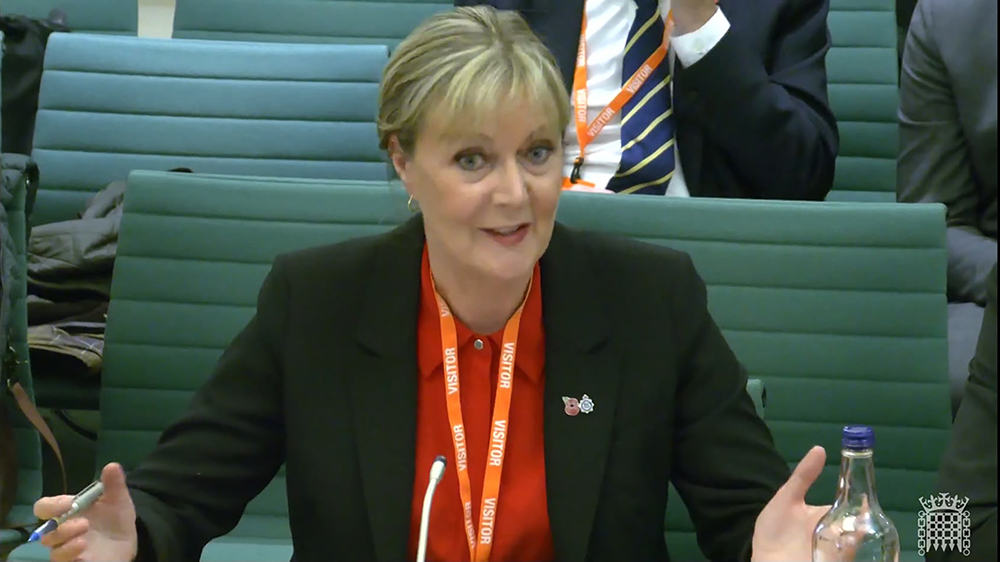
APCC Joint Roads Policing and Transport Lead Joy Allen appeared before the Transport Select Committee this week (Wednesday 11 November) where she gave evidence on the need for stronger and more targeted investment to back up the Government’s ambitious road safety plans.
The hearing formed part of the Committee’s inquiry to examine the potential effectiveness of the Government’s new Road Safety Strategy. The County Durham and Darlington PCC previously submitted written evidence on its approach to reducing death and serious injury on the roads alongside Joint Roads Policing and Transport Lead, Warwickshire PCC Philip Seccombe. She was joined at the hearing by representatives from Oxfordshire County Council and the Motor Insurers’ Bureau to discuss wider road traffic enforcement issues, including governance, police capacity and funding, speed enforcement and dangerous and uninsured driving.
Joy Allen said: “I was delighted to give evidence at today’s Transport Select Committee hearing, representing the public voice and sharing my experience as a road safety campaigner and victims’ advocate.
“PCCs have long called for tougher action to reduce serious injuries and deaths on our roads. We wholeheartedly welcome the Government’s ambitious Road Safety Strategy, and its casualty reduction targets. We also welcome the renewed political focus in reducing preventable tragedies on our roads.
“However, targets do not protect anybody unless the people responsible for delivering them have the resources, powers and accountability to act. In my evidence to the committee, I raised concerns that the proposed reforms do not go far enough, particularly in relation to high-risk groups of road users including young and novice drivers. I have seen first-hand how gaps in the law devastate families such as John and Karen Rowlands, whose teenage son Andrew died as a passenger in an unroadworthy car. Their call for stricter rules on uninsured, unlicensed drivers and unroadworthy vehicles must be heard if we are serious about preventing further loss of life.
“I also highlighted the need for substantial, long-term funding and resources to deliver the proposed enforcement reforms, including stronger roadside drink and drug drive testing, eyesight testing and new mandatory learner requirement checks, which would place substantial extra demands on the police when they are already under pressure.
“Our communities want safer roads and saving lives must remain a priority. Behind every road death is a family whose life has irrevocably changed. This Road Safety Strategy has taken 10 years to develop and implementation should be urgent. I pressed the Committee for three commitments: a funded delivery plan; clear joint accountability across government and local partners; and effective enforcement that changes behaviour and prevents repeat offending.
“We urge the Government to back its ambition with sustained investment in enforcement capability and capacity, alongside education, rehabilitation and partnership delivery. PCCs and Deputy Mayors are committed to working with the government and all partners to deliver the strategy and save lives, pioneering preventative education and behaviour change activity in their areas to ensure drivers fulfil their duty of care on the roads and recognise the weight of responsibility that lies behind the wheel.”